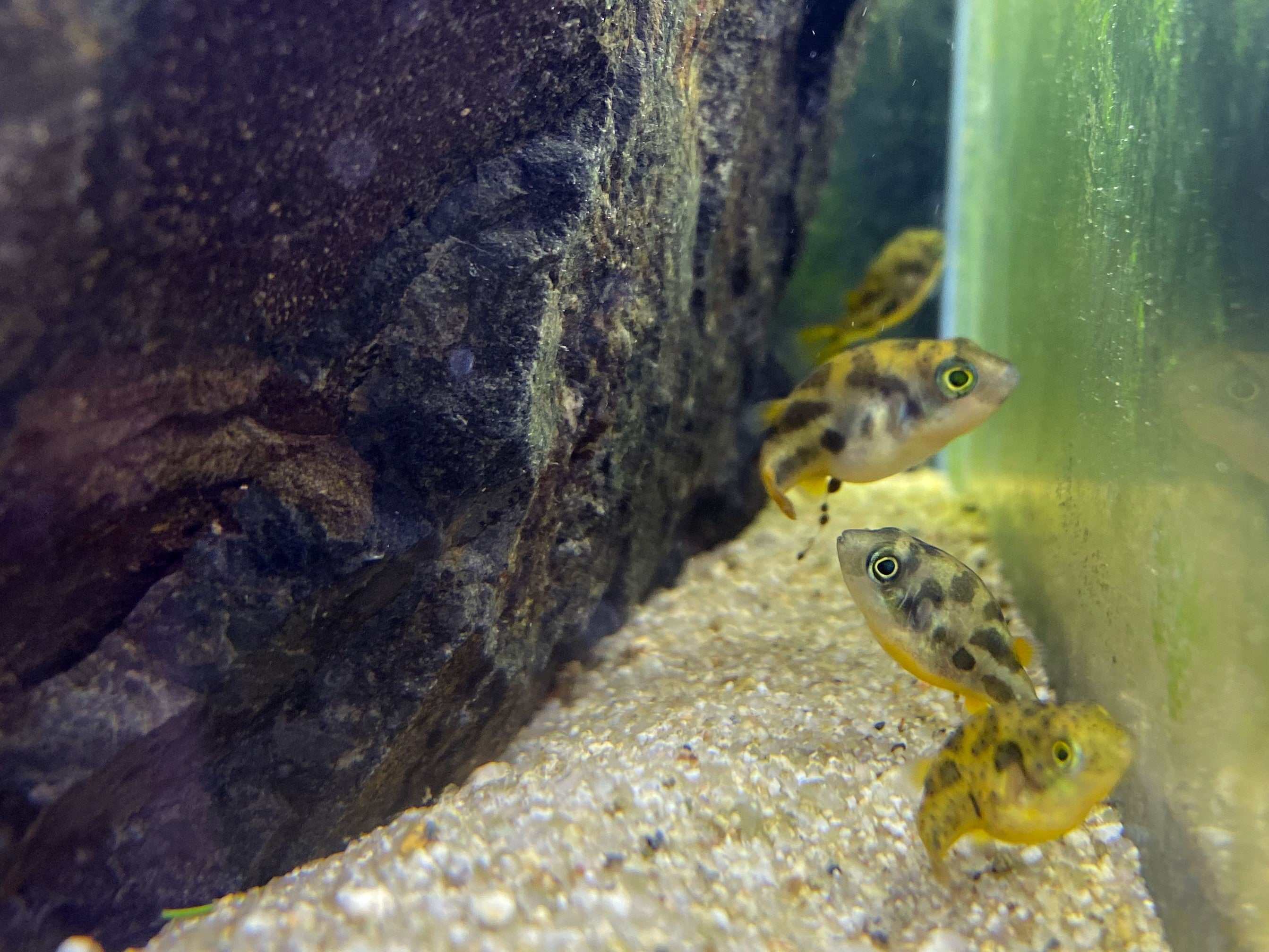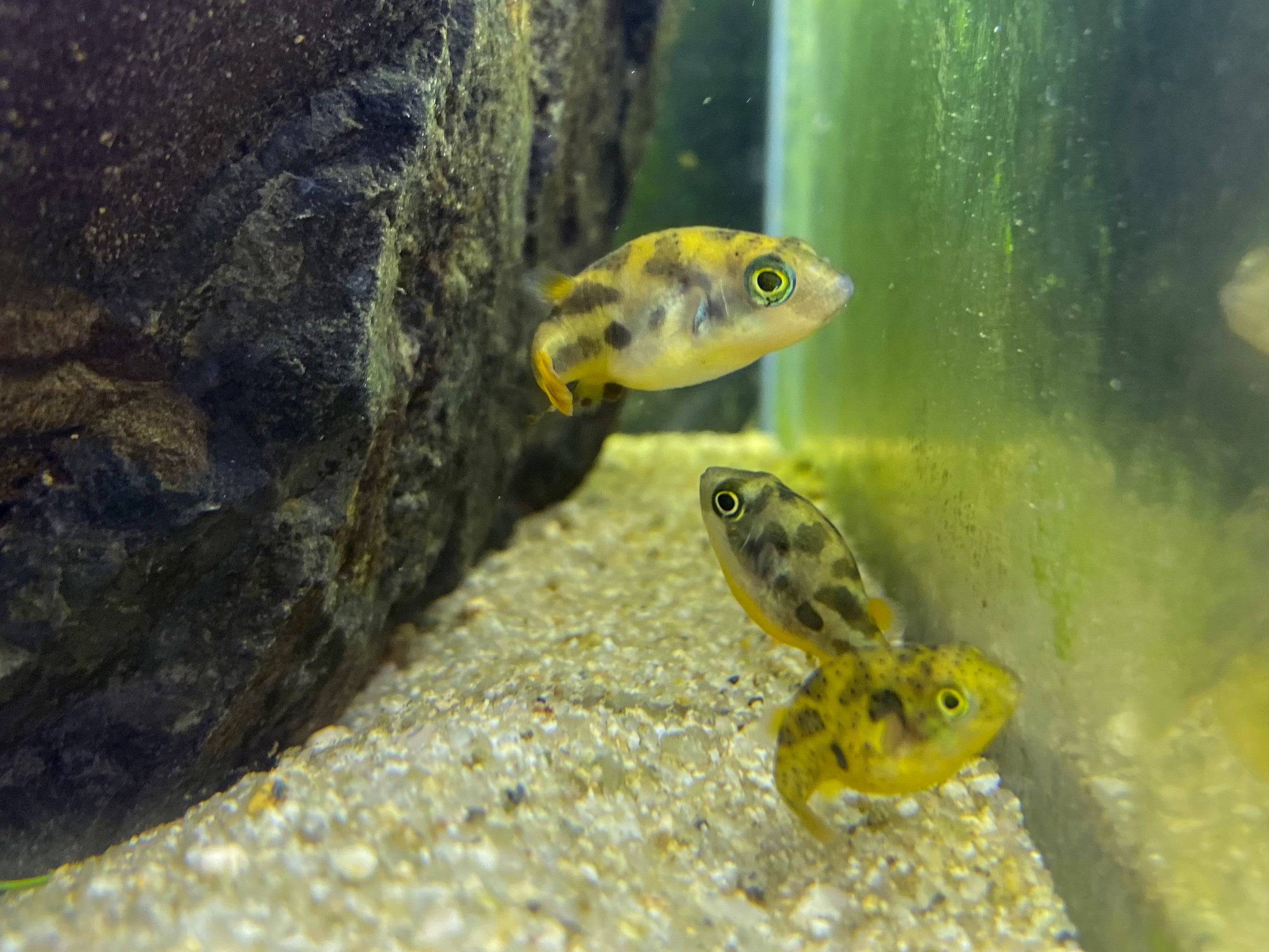
Pea Puffer
Sale price
Price
$89.99
Regular price
$100.00
Unit price
per
Discover the Charm of the Pea Puffer
The Pea Puffer, also known as the Pygmy Puffer or Malabar Dwarf Puffer, is one of the smallest and most intriguing freshwater puffers. Despite their shy nature due to their small size, they are quite territorial and can be aggressive to fish larger than them. This unique personality trait makes them fascinating to observe in a well-planted tank where they can feel secure.
Originating from the freshwaters of India, the Pea Puffer is a 100% true freshwater puffer, making them an ideal choice for those interested in keeping puffers without the need for brackish water. With proper care and a suitable environment, the Pea Puffer can thrive and display its natural behaviors, providing an entertaining and educational experience for aquarium enthusiasts.
Tank-Mate Compatibility Guide
Pea Puffers can be challenging to house with other species. Individual temperament and tank setup vary significantly — use this table as a general starting point, not a guarantee.
| Species / Group | Compatibility | Notes |
|---|---|---|
| Dwarf Shrimp (e.g., Cherry, Amano) | ⚠️ Not Recommended | Pea Puffers are natural snail and shrimp hunters. Most shrimp will be targeted and eaten. Adding shrimp to a puffer tank is done at the keeper's risk. |
| Larger Shrimp (e.g., Bamboo, Vampire) | ⚠️ Caution | Larger shrimp may fare better but are still at risk of fin-nipping or predation, especially in smaller tanks. Not reliably safe. |
| Ornamental Snails (e.g., Nerite, Mystery) | ⛔ Not Recommended | Snails are a core part of the Pea Puffer's natural diet and are actively hunted. Snails are best used as a food source, not as tank-mates. |
| Other Pea Puffers | ⚠️ Caution | Can be kept together in a species-only setup with ample space (10+ gallons for a small group), dense planting, and multiple sight breaks. Males may harass each other; watch closely for aggression. |
| Small, Fast Schooling Fish (e.g., Ember Tetras, Chili Rasboras) | ⚠️ Caution | Sometimes kept together successfully in larger, heavily planted tanks. Fast-moving fish may avoid nipping, but fin-nipping incidents are still reported. Results vary by individual puffer. |
| Slow or Long-Finned Fish (e.g., Bettas, Guppies, Angelfish) | ⛔ Not Recommended | Long fins are a frequent target for nipping. Slow fish cannot evade a determined puffer. These combinations are generally not advised. |
| Bottom Dwellers (e.g., Corydoras, Otocinclus) | ⚠️ Caution | Reported with mixed results. Bottom-dwelling fish may be ignored or may be nipped. Closely monitor any new introduction. |
Individual behavior and tank setup (size, planting density, hiding spots) play a large role in compatibility outcomes. We recommend researching your specific combination and having a backup plan if aggression becomes a problem.